
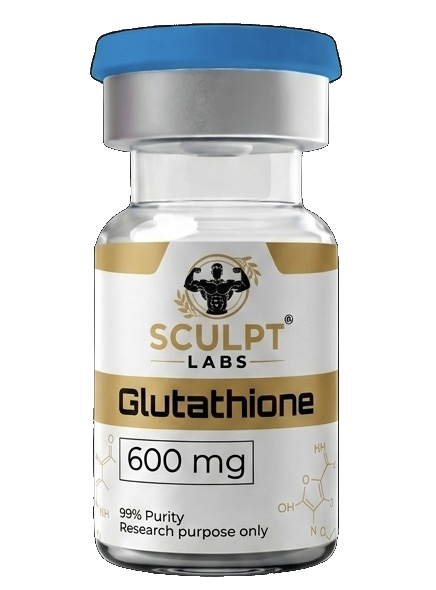
Glutathione (GSH) is often called the body's 'master antioxidant' — a tripeptide of glutamate, cysteine and glycine found in virtually every living cell. It sits at the centre of cellular redox balance and carries one of the largest research literatures of any small peptide. This overview summarises what published research reports about glutathione's structure and study areas, distinct from any claim about human therapeutic use.
What is glutathione?
Glutathione is a tripeptide made of three amino acids: glutamate, cysteine and glycine. Its structure is unusual because the glutamate is joined through its side-chain carboxyl group — a gamma-peptide bond — rather than the standard alpha bond, which makes it resistant to breakdown by most peptidases. Cells synthesise it in two ATP-dependent steps, and it is present at millimolar concentrations intracellularly, underlining how central it is to normal cell function.
The master antioxidant: glutathione's redox role
The reactive part of glutathione is the thiol (-SH) group on its cysteine residue. This thiol donates electrons to neutralise reactive oxygen species (ROS) and free radicals, with the enzyme glutathione peroxidase using GSH to reduce peroxides to water. In doing so, two molecules of reduced glutathione (GSH) are oxidised into a disulfide-linked dimer (GSSG). The ratio of GSH to GSSG is widely used in research as a marker of a cell's oxidative-stress status, and the enzyme glutathione reductase continually recycles GSSG back to GSH.
Skin and pigmentation research
Glutathione is one of the most-researched compounds in skin-pigmentation studies. In-vitro work reports that it can inhibit tyrosinase — the rate-limiting enzyme in melanin synthesis — and shift melanin production from darker eumelanin toward lighter pheomelanin. This mechanism is why glutathione features heavily in cosmetic-research literature. These are laboratory observations, not human treatment claims.
Detoxification and cellular research
Beyond antioxidant defence, glutathione is central to phase II detoxification. Glutathione-S-transferase enzymes conjugate GSH to a wide range of xenobiotics and reactive metabolites, making them water-soluble for clearance — a pathway heavily studied in liver and toxicology research. A dedicated mitochondrial glutathione pool is separately studied for its role in protecting cellular energy machinery.
Glutathione, ageing and oxidative stress research
Intracellular glutathione levels are reported to decline with age and under conditions of high oxidative load, which is part of why the peptide attracts interest in ageing and metabolic research. Oral glutathione is subject to significant breakdown in the gut, so research into bioavailability and alternative routes is an active area — one reason lyophilised research-grade material is studied directly in the laboratory.
Reconstitution basics in a research setting
Glutathione is supplied as a lyophilised powder and, for in-vitro work, is typically dissolved in bacteriostatic or sterile water. It is sensitive to light and oxidation, so freshly reconstituted solutions and cool, dark storage are standard practice. The Sculpt Labs Reconstitution Calculator converts vial mass and diluent volume into mg/mL for record-keeping, and independent HPLC purity data is published for every batch on our Purity Reports page.
Frequently asked questions
What is glutathione?
Glutathione (GSH) is a tripeptide of glutamate, cysteine and glycine found in almost every cell. It is central to antioxidant defence and cellular detoxification and is often called the body's 'master antioxidant'.
Why is glutathione called the 'master antioxidant'?
Because its cysteine thiol group directly neutralises reactive oxygen species and because it regenerates other antioxidants such as vitamins C and E, placing it at the hub of the cell's redox defences.
What is the difference between reduced (GSH) and oxidised (GSSG) glutathione?
GSH is the active reduced form with a free thiol group; when it neutralises a free radical, two GSH molecules join into the oxidised disulfide form GSSG. The GSH:GSSG ratio is used as a marker of oxidative stress in research.
What is glutathione researched for in skin studies?
In-vitro research reports that glutathione can inhibit the enzyme tyrosinase and shift melanin synthesis toward lighter pheomelanin. These are laboratory findings, supplied for research only and not a treatment claim.
How is glutathione purity verified?
Independent HPLC analysis from a third-party laboratory such as Janoshik Analytical confirms identity, purity and batch number, with a Certificate of Analysis published for each batch.
Sculpt Labs research peptides — HPLC verified, Janoshik tested.
Explore the Sculpt Labs range →⚠ For research purposes only — not for human consumption.