In 2026, Eli Lilly reported the phase-3 TRIUMPH results for retatrutide — and the weight-loss numbers were the biggest yet seen for an incretin drug. This is a plain-English summary of what the published trial data actually showed, written as research context, not medical advice. Retatrutide is not an approved medicine and is supplied only as a research chemical.
What is retatrutide?
Retatrutide is a triple receptor agonist — it acts on the GLP-1, GIP and glucagon receptors at once. That third target (glucagon) is what sets it apart from tirzepatide (GLP-1 + GIP) and semaglutide (GLP-1 only), and it's thought to add an effect on metabolic rate and fat oxidation on top of appetite reduction.
What TRIUMPH-1 measured
TRIUMPH-1 randomised 2,339 participants to retatrutide 4mg, 9mg, 12mg or placebo. At 80 weeks, the 12mg group lost an average of 25.0% of body weight versus 3.9% on placebo. 45.3% of people on 12mg hit at least 30% weight loss, and in a longer extension in higher-BMI participants the figure reached about 30.3% at 104 weeks with no plateau seen.
TRIUMPH-2 and TRIUMPH-3
Two further 2026 phase-3 trials extended the picture: up to ~20.8% weight reduction in adults with type 2 diabetes, and up to ~22.6% in adults with severe obesity and established cardiovascular disease, both at 80 weeks, alongside improvements in blood-sugar markers.
Side-effect profile
The most common adverse events reported were gastrointestinal — nausea and diarrhoea — mostly mild to moderate and clustered during the dose-escalation phase. This is the pattern seen across the incretin class and is one reason a slow, low-start titration is used in the trials.
How it compares, and where it stands
By the trial data, retatrutide's headline weight loss (~25–30%) sits above tirzepatide (~21%) and semaglutide (~17%). It is not yet approved: a regulatory application is expected in early 2027, so for now it exists only as a research compound, not a prescribed medicine.
Frequently asked questions
How much weight loss did retatrutide show in TRIUMPH-1?
At 80 weeks the 12mg dose produced an average 25.0% body-weight reduction vs 3.9% on placebo, with about 45% of participants losing 30% or more; a longer extension reached roughly 30.3%.
Is retatrutide approved or available in the UK?
No. Retatrutide is not an approved medicine anywhere yet — a regulatory filing is expected around early 2027. It is supplied only as a research chemical, for laboratory use, not for human consumption.
What side effects were reported?
Mostly gastrointestinal — nausea and diarrhoea — generally mild to moderate and concentrated during dose escalation.
How does retatrutide compare to tirzepatide and semaglutide?
By trial data its weight-loss numbers (~25–30%) are higher than tirzepatide (~21%) and semaglutide (~17%), attributed to its triple GLP-1/GIP/glucagon mechanism.
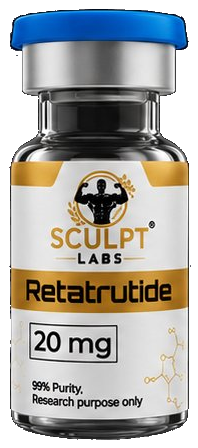
Sculpt Labs Retatrutide 20 mg — HPLC verified, Janoshik tested.
View HPLC-verified Retatrutide →⚠ For research purposes only — not for human consumption.